Synseer / The next chapter of personal wellnessGet launch updates ↗
Synseer Background motion is on. Select to pause.
Partner with Synseer

Help shape
ear-based health.

Work with Synseer to explore what repeated ear-based data could add to a wellness pilot, a defined research study or a technology integration.

Watch the film

What We Can Build Together

38 seconds

Read the film transcript

A useful partnership starts with a question worth answering.

For a practice, it might be how an ear-based experience could fit the people and routines you already support.

For a research team, it starts with a defined question, a protocol and a reference.

For a technology partner, it means identifying where your expertise fits and what we can evaluate together.

One clear purpose. A useful first program. Tell us what you want to learn or build.

Choose your sector

See where you could start.

Pick a pathway for a one-minute look at a possible project, what your team could bring, and the decision you’d make together.

Longevity and concierge practices

Could data between visits add context to check-ins?

An opt-in group of adults tries a short wear routine. The pilot asks whether a history of comparable readings could add useful context to recurring wellness check-ins.

Illustrative project · Scope agreed with each partner
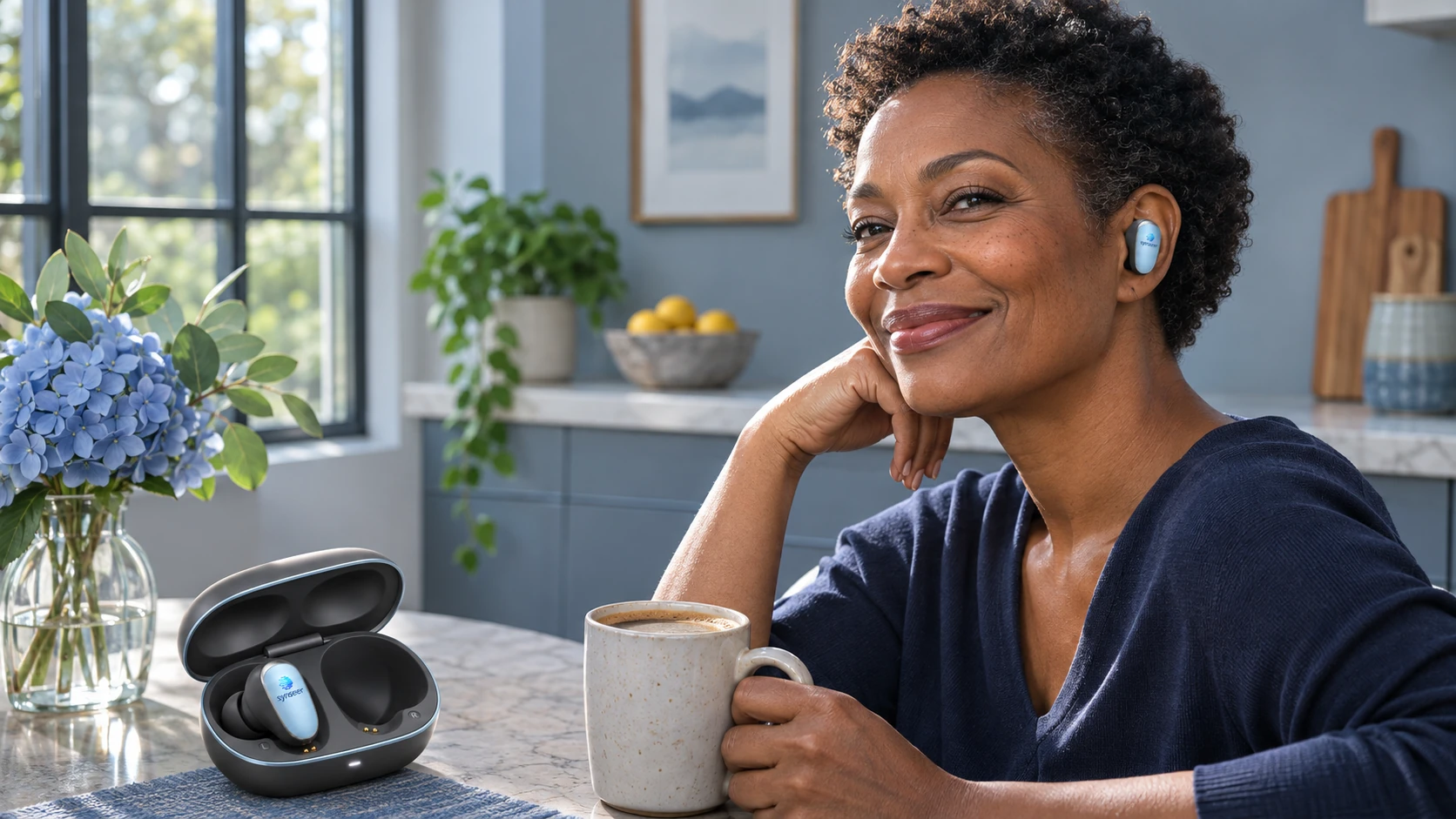
Adult wearing a light-blue HealthBud in a quiet morning setting
HealthBuds appearance concept

Walk through the project

Step 1 of 3
Set the routine

Choose one group of adult members, a short wear routine, and a staff lead. Agree how participants will opt in, which readings to review and what the check-ins will cover.

Step 2 of 3
Try it between visits

Walk through fit and onboarding with participants. Track which readings and check-ins are completed, where people need help, and how much staff time the routine takes.

Step 3 of 3
Review the experience

Review whether the readings added useful context alongside comfort, completion and staff effort. Decide what to repeat or change.
Health systems and research teams

What can we learn from a well-defined signal?

An adult feasibility study compares a predefined ear-based observation with a reference method under specified wear conditions.

Illustrative project · Scope agreed with each partner

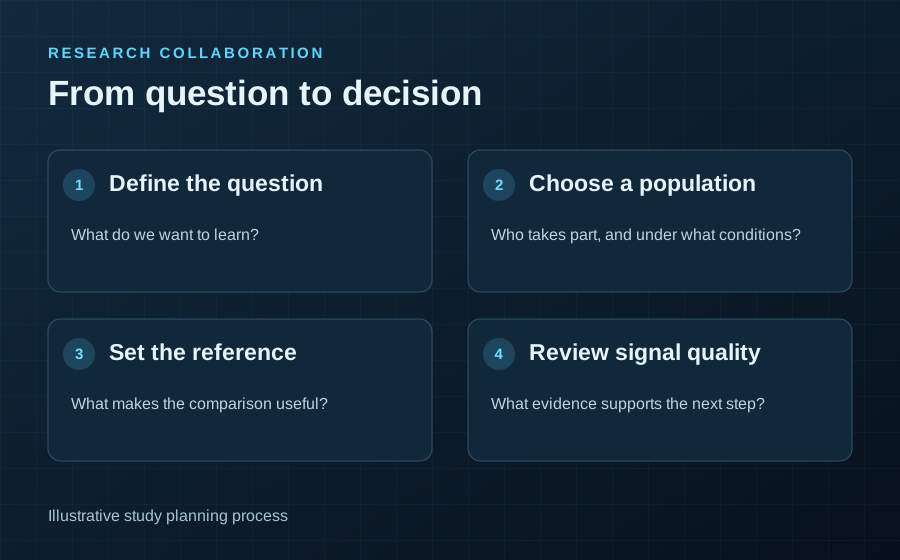
Diagram showing study design, signal capture, comparison, and evidence review
Illustrative research workflow

Walk through the project

Step 1 of 3
Define the question

Select the population, one primary observation, and a reference method. Set the study conditions and interpretation criteria before collecting data.

Step 2 of 3
Plan usable observations

Specify the recording setup, fit and motion checks, and how to account for missing or excluded observations. Define consent and access in the protocol.

Step 3 of 3
Review the evidence

Review usable recordings and agreement with the reference under each study condition. Use the limits to decide whether to revise or expand the study.

Audio, device, and software companies

Where could your technology fit into the platform?

Two technical teams define a candidate component or software module, then agree on a small test in a development setup.

Illustrative project · Scope agreed with each partner

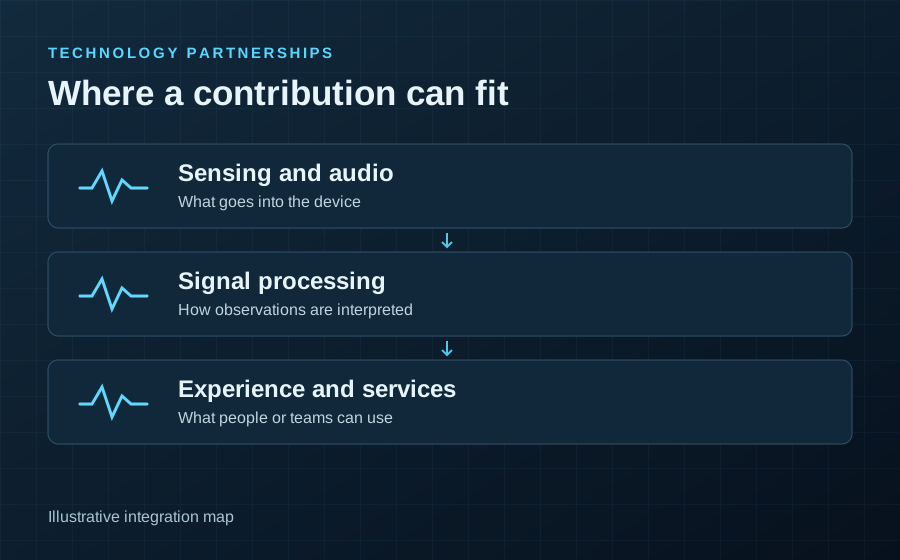
Diagram connecting sensing and audio, signal processing, and experience and services
Illustrative integration map

Walk through the project

Step 1 of 3
Define the contribution

Choose one use case and the component or module that could support it. Compare the current evidence with the requirements of that use case.

Step 2 of 3
Set the bench test

Specify interfaces, operating conditions, and the acceptance criteria. Include relevant fit, power, timing, or signal-quality constraints.

Step 3 of 3
Decide what comes next

Review the findings and integration effort together. Identify what needs another test before considering a joint development plan.

Other partner sectors

More ways to collaborate.

How to start

One question. A useful first conversation.

  1. Share the use case

    Tell us who you serve and what you’d like to evaluate or build.

  2. Scope a first project

    Agree on the contribution, evidence, and decision a first project should support.

  3. Continue together

    Teams can use the Partner Network for more detailed scoping after an initial review.

Start a partner inquiry
Find your starting point

What brings
you here?

Choose a starting point to explore a Synseer pathway.

I’m exploring for…

This guide does not request, store or submit personal information.

Your starting point

Want to talk with Synseer? Prepare an inquiry ↗